Skip to content

Photography model release form template

This free model release form lets the person you photograph choose how their image can be used, from your portfolio to advertising, and records what they receive in return. It covers retouching, sensitive uses, withdrawal under UK GDPR and a parent or guardian signature for under-18s, with notes on UK and US law.

Free release form · 926 words · Updated 14 October 2026

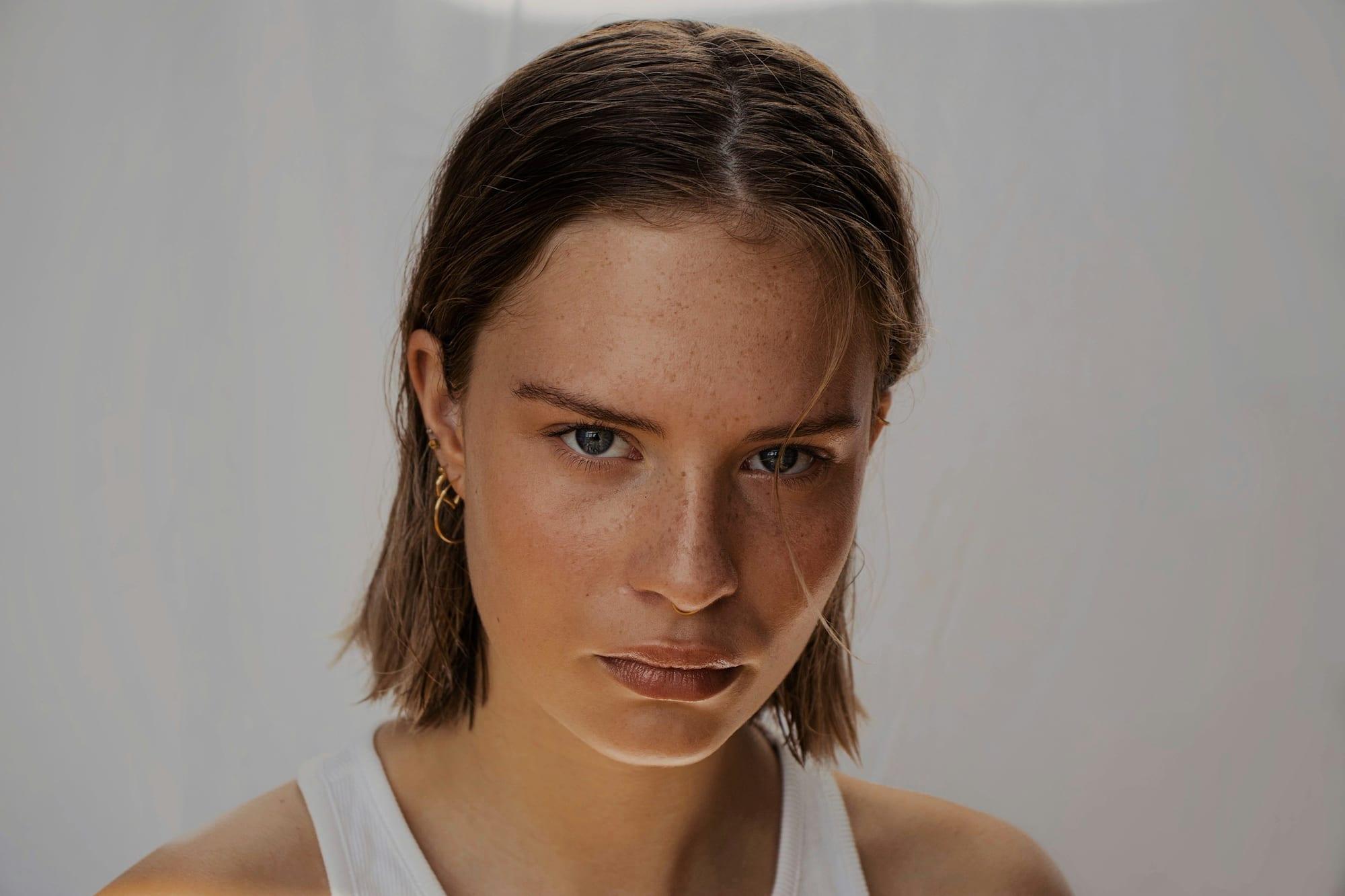
Natural-light portrait of a woman in a white tank top

Photograph by Fleur Kaan, via Unsplash.

This template isn't legal advice. It's a well-made starting point. Laws differ between the UK, US states and other countries, so have a solicitor or attorney review it for your business before you rely on it.

When you need a model release

A model release is written permission from the person in a photograph for you to use their image in the ways it describes. You need one whenever you, or a client, will use an identifiable person's image to promote something: advertising, a brand campaign, packaging, stock photography licensed for commercial use, or your own paid marketing.

  • In the US, most states recognise a right of publicity: a person's right to control commercial use of their name and likeness. Using someone's photograph to advertise a product without consent can lead to a claim under state law, and some states, including New York, require that consent in writing.
  • In the UK, there is no general "image right", so no single law requires a release. But commercial use without permission can still go wrong. An advert that falsely suggests someone endorses a product can be passing off, publishing private moments can be a misuse of private information, and a photograph of an identifiable person is personal data under UK GDPR, so you need a lawful basis to use it. In practice, stock agencies, advertising clients and the UK advertising codes all expect written permission before an identifiable person appears in commercial work.

Editorial or commercial use?

Editorial use means illustrating news, commentary or education, such as a magazine feature or an article about an event. It usually doesn't need a release, although privacy and data protection still apply in the UK. Commercial use means using the image to sell, promote or endorse something, and that's where releases matter. Your own portfolio and social media sit in between: they market your business, so get permission.

The release gives you permission to use the person's image. It doesn't change who owns the photographs. You keep the copyright, and the model has no right to use the images unless you grant one, which the template offers as an option.

How to use this template

  1. Fill in the shoot details first. The date, location, purpose and any client, so the model knows exactly what they're agreeing to.
  2. Let the model choose the uses. Tick boxes make the scope a real choice. A release that lists each use clearly is easier to rely on later, because there's no argument about what the model understood.
  3. Give something in return. Payment, edited images or another benefit makes the release part of an agreement, rather than a bare permission.
  4. Sign before the shoot. Asking afterwards, when the images already exist, puts pressure on the model and invites refusal.
  5. Under-18s need a parent or guardian. Have them sign, and explain the shoot to the child in words they understand.
  6. Keep it with the images. Store the signed release with the shoot, and you'll be able to find it when an agency or client asks.

In Caloreel, releases can be sent for e-signature like any contract. Each signer, including a parent or guardian, gets their own link, and the signed copy stays on the client's record. See contracts and invoices.

This template is general information, not legal advice. Have a solicitor (UK) or attorney (US) review your final version, particularly for advertising work or photographs of children.

The template · copy it, download it, or send it from Caloreel

Model Release

Release reference: [REFERENCE]

Date: [DATE]

Parties

The Photographer: [PHOTOGRAPHER NAME], trading as [STUDIO NAME], of [BUSINESS ADDRESS]. Email: [EMAIL]. Telephone: [PHONE]. "We" and "us" mean the Photographer and anyone we license within the uses you choose.

The Model: [MODEL FULL NAME], of [MODEL ADDRESS]. Email: [MODEL EMAIL]. Date of birth (if under 18): [DATE OF BIRTH]. "You" means the Model.

1. The shoot

Detail Information
Date [SHOOT DATE]
Location [LOCATION]
Purpose [FOR EXAMPLE: PORTFOLIO, A CAMPAIGN FOR [CLIENT NAME], STOCK]
Client [CLIENT NAME, OR DELETE]

In this release, "the Photographs" means the photographs of you taken at this shoot.

2. Your permission

2.1 You give us permission to use, publish and reproduce the Photographs, in any medium, for the uses you tick below. Please tick each use you agree to:

2.2 We will only use the Photographs for the uses you have ticked. Any other use needs your written permission.

2.3 Please tick one:

3. What you receive

3.1 In return for this release, you will receive [CHOOSE: A FEE OF [AMOUNT], PAYABLE BY [DATE] / [NUMBER] EDITED PHOTOGRAPHS FROM THE SHOOT / OTHER].

3.2 This is the full payment for the uses you have ticked. No further fees or royalties are due.

3.3 [OPTIONAL: You may use the edited photographs we give you in your own modelling portfolio and on personal social media, crediting [STUDIO NAME OR SOCIAL HANDLE], but not sell, license or otherwise use them commercially.]

4. Duration and territory

4.1 This permission applies [WORLDWIDE / IN [TERRITORY]] for [NO TIME LIMIT / [NUMBER] YEARS FROM THE SHOOT DATE].

4.2 After that, we will make no new use of the Photographs, but material already printed, published or distributed may remain in circulation.

5. Editing and retouching

5.1 We may crop the Photographs, adjust colour and exposure, retouch temporary blemishes, and combine them with text, graphics or other images.

5.2 Without your agreement, we will not change your body shape or facial features, or edit the Photographs in a way a reasonable person would find offensive.

6. Approval

Please tick one:

7. Sensitive uses

Unless you agree in writing, we will not use the Photographs in a way that suggests you personally have, support or are connected with a physical or mental health condition, a particular sexual orientation or gender identity, political, religious or philosophical beliefs, criminal activity, or tobacco, alcohol, gambling, weapons or adult products [OR OTHER SUBJECTS]. We will never use the Photographs in a way that is pornographic or defamatory.

8. Your personal data

8.1 The Photographs and your details are personal data. We use them as this release allows. Our privacy notice at [PRIVACY NOTICE URL] explains your rights, including the right to complain to the Information Commissioner's Office.

8.2 If you change your mind. [KEEP ONE OF THE TWO PARAGRAPHS BELOW AND DELETE THE OTHER.]

[IF YOU RELY ON CONSENT, FOR EXAMPLE FOR AN UNPAID PORTFOLIO SHOOT:] You can withdraw your permission for future uses at any time by emailing [EMAIL]. We will stop new uses straight away, remove the Photographs from our own website and social media within [30] days, and tell anyone we have licensed them to. Withdrawing does not affect uses made before you told us, and we cannot recall material already printed, published or distributed.

[IF THE MODEL IS PAID FOR COMMERCIAL USE:] Because you have been paid for the uses you ticked, this permission forms part of our agreement and continues for the period in section 4. You still have rights under data protection law. If you are unhappy with a particular use, please tell us and we will consider your request fairly.

9. Models under 18

If the Model is under 18, a parent or guardian with parental responsibility must sign below, confirming that they have authority to agree to this release on the Model's behalf and that the shoot and its uses have been explained to the Model in a way they understand.

10. General

10.1 You confirm that you are 18 or over (or a parent or guardian is signing below) and that no agency or other agreement prevents you from signing.

10.2 We own the copyright in the Photographs. This release does not transfer it to you.

10.3 This release is the whole agreement between us about the Photographs, and may be signed electronically.

10.4 This release is governed by the law of [ENGLAND AND WALES], and the courts of [ENGLAND AND WALES] have jurisdiction.

Signatures

By signing, you confirm that you have read and understood this release.

Signed by Signature Full name Date
Model [MODEL NAME]
Parent or guardian (Model under 18) [NAME AND RELATIONSHIP TO THE MODEL]
For [STUDIO NAME] [PHOTOGRAPHER NAME]
Witness (optional) [NAME AND ADDRESS]

UK notes

  • No image right, but other protections. English law has no general right to control your own image. Passing off can apply where an advert falsely suggests someone endorses a product, though it mainly protects people with a public reputation: in 2015 the Court of Appeal upheld Rihanna's claim against Topshop over T-shirts printed with her photograph. Misuse of private information can apply to photographs of private moments, and the courts take particular care where children are involved.
  • Data protection. A photograph of an identifiable person is personal data, so you need a lawful basis to use it. If you rely on consent, the person must be able to withdraw it at any time, and withdrawing must be as easy as giving it (ICO guidance on consent (opens in a new tab)). If you would carry on using the images regardless, consent is the wrong basis to claim. That's why section 8.2 offers a separate paragraph for paid commercial shoots.
  • Advertising codes. The UK Code of Non-broadcast Advertising (the CAP Code) urges advertisers to get written permission before portraying members of the public, and agencies will usually ask to see your releases.
  • Children. Have a parent or guardian with parental responsibility sign for anyone under 18. If a child is paid to model, a child performance licence from the local council may also be needed. In Scotland, the age of legal capacity rules differ, so take Scottish advice.

US notes

  • Right of publicity. This is state law, so the rules vary. Some states have statutes, such as New York's Civil Rights Law (sections 50 and 51) and California's Civil Code section 3344; others rely on common law. Commercial and advertising uses carry the most risk, while news and other editorial uses are generally protected.
  • Minors. In many states a minor can cancel a contract they signed themselves, so have a parent or legal guardian sign. Some states have extra rules for minors working as models or performers.
  • Stock agencies. Agencies set their own release requirements and some only accept their own form, so check before you shoot for stock.
  • Copyright. The photographer owns the copyright unless it's transferred in a signed writing (17 U.S.C. §§ 201 and 204 (opens in a new tab)). A model release doesn't change that.

This is general information, not legal advice. Speak to a solicitor (UK) or attorney (US) before relying on it.

Questions,
answered.

Do I need a model release in the UK?

No single UK law requires one, because there is no general image right. But passing off, privacy and data protection law can all apply to commercial use of someone's image, and stock agencies, advertising clients and the advertising codes expect written permission. For any commercial use of an identifiable person, get a signed release.

Do I need a model release for editorial use?

Usually not. Editorial use, such as illustrating a news story or magazine article, generally doesn't need a release in the UK or the US. Commercial use, where the image sells, promotes or endorses something, is where releases matter. Privacy and data protection still apply to editorial use in the UK.

Does a model release give the model the copyright?

No. A model release is the model's permission for you to use their image. The photographer keeps the copyright. If the model wants to use the photographs, give them a separate licence, such as the optional personal-use licence in this template.

Can a model withdraw a model release?

It depends on the basis. In the UK, if you rely on consent under data protection law, the model can withdraw it for future uses at any time, though material already printed or distributed can't be recalled. If the model was paid for commercial use, the release usually forms part of a contract that continues for the agreed period.

Who signs a model release for a child?

A parent or guardian with parental responsibility, for anyone under 18. Explain the shoot and how the images will be used to the child as well, in words they understand, and check whether a child performance licence is needed if they are being paid.

Use it in Caloreel.

Start a free trial and this release form is ready to send in your brand, signed by everyone who needs to sign. Fourteen days, no card.