How to sell more prints from your client galleries
Sales · Updated 6 October 2026 · 6 min read · By the Caloreel editorial team

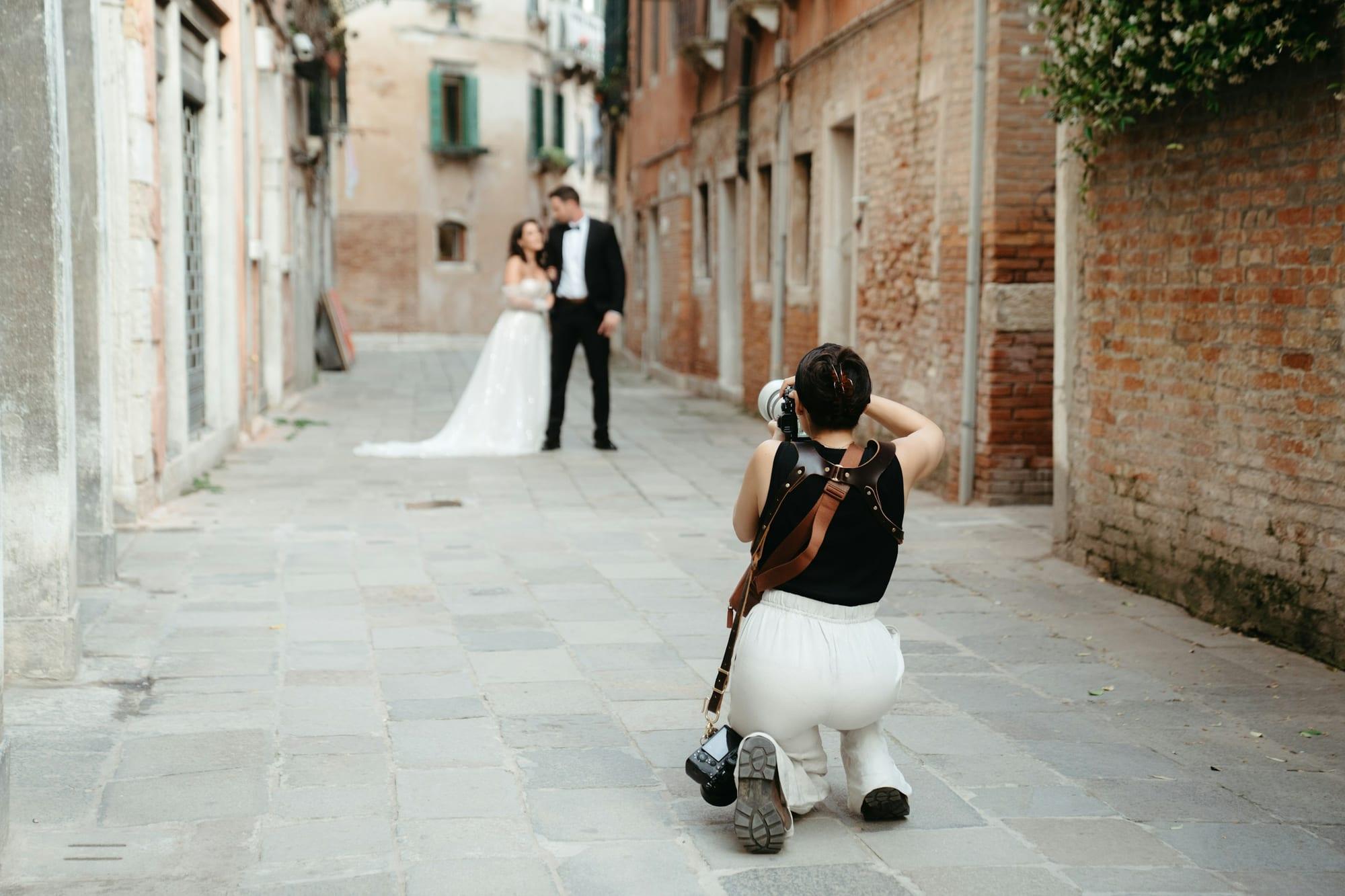
Photograph by Osarugue Igbinoba, via Unsplash.
The short answer
Print sales come from planning, not luck. Mention products at booking, offer a short price list with packages, price at a healthy multiple of lab cost, open a time-limited ordering window when the gallery goes live, then follow up with favourites-based suggestions, reminders before expiry and gift-season prompts. Let guests buy too.
Start the conversation at booking
Most print sales are decided before the gallery goes live. If a client first hears about wall art in the delivery email, it reads as an upsell. If they heard about it at the consultation, it reads as the next step.
- Show real products. Keep a framed print and an album sample at consultations. On video calls, hold them up to the camera and share photos of them in real rooms.
- Put products in your welcome guide. One page on what clients usually order, with price ranges, sets expectations without pressure.
- Consider a product credit. A £100 credit built into a family session price gets clients into the store, and a credit that must be spent within the ordering window gives them a reason to act.
- Ask where the photos will live. "Is there a wall you're hoping to fill?" belongs in your questionnaire. Families often know exactly which one.
Curate a shorter price list
Long price lists slow decisions down. Forty sizes and six papers turn a happy decision into homework, and homework gets put off. Fewer, better options are easier to say yes to.
| Range | What to offer | Why it earns its place |
|---|---|---|
| Small prints | 7×5 and 10×8 on one or two papers | Gifts and shelf frames; an easy first purchase |
| Wall art | Two or three framed sizes, one canvas size | Where most of your profit sits |
| Albums | One album style in two page counts | Tells the whole story; built from their favourites |
| Digital | Full gallery or single images | For clients who want to print locally |
| Packages | Two or three bundles, such as a "wall trio" or "gift set of six 7×5s" | Simplifies the choice and lifts the order value |
Price bundles so they are clearly better value than buying the pieces separately, and so the middle option is the one you'd most like people to choose.
If clients want to print elsewhere, sell high-resolution downloads with a written permission that sets out what they can and can't do. Our print release form template covers personal printing, sharing and what stays yours.
Price for margin, not from the lab's list
Start with your lab cost, then multiply. Small prints usually carry a high multiple because the pounds involved are small and every order still takes your time to check. Wall art can carry a lower multiple and still earn far more per order.
The worked example below assumes you aren't VAT-registered, the buyer pays with a standard UK card on Stripe (1.5% + 20p at the time of writing, per Stripe's UK pricing (opens in a new tab)), a 3% store fee applies, and delivery is charged to the client at cost. Lab costs are illustrative, so use your own lab's current prices.
| Product | Lab cost | Your price | Multiple | 3% store fee | Card fee | You keep |
|---|---|---|---|---|---|---|
| 7×5 print | £2.50 | £18 | 7.2× | £0.54 | £0.47 | £14.49 |
| 10×8 print | £4 | £35 | 8.8× | £1.05 | £0.73 | £29.22 |
| 16×12 framed print | £45 | £150 | 3.3× | £4.50 | £2.45 | £98.05 |
| 30×20 canvas | £60 | £220 | 3.7× | £6.60 | £3.50 | £149.90 |
Two things to notice. One canvas earns more than five 10×8 prints, which is why wall art deserves pride of place in your price list. And if you are VAT-registered, one sixth of a VAT-inclusive price at the 20% standard rate is VAT: the £35 print becomes £29.17 before any costs. Build that in from the start rather than absorbing it later.
Your time matters too. Every order needs a quick check for crops and print sizes before it reaches the lab. In the Caloreel print store the crop tool enforces each size's ratio and nothing goes to the lab until you approve it, but even so, price small prints so that approving them is worth a few minutes.
Use the first two weeks after release
Excitement peaks when the gallery lands. An early-bird window turns that into orders.
- Announce it in the delivery email: for example, 15% off wall art for orders placed within 14 days.
- Use a coupon with a real end date, not a vague promise.
- Send one reminder two or three days before the window closes.
Keep the discount modest and time-limited. A permanent discount is simply a lower price.
Turn favourites into suggestions
Favourites tell you exactly what a client loves. Use them.
- Lots of favourites? Suggest an album built around their own picks, and offer to design a first draft from the list.
- Same image favourited by several people? It is a strong candidate for a large framed print. Suggest a size and show it on a wall.
- Separate lists for separate people. When each person can keep their own favourites and named lists such as "Album picks" or "Prints for Mum", you see what parents and partners want individually. Client galleries in Caloreel work this way.
Send suggestions personally: a short email with three images and one product idea each beats a generic "the store is open" message.
Show products in context
It's easy to underestimate print size on a screen. A 10×8 that looks generous on a laptop looks lost above a sofa.
- Show room mock-ups of 16×12, 24×16 and 30×20 on a real wall.
- Add a size guide next to your price list. A common interior rule is that art above a sofa should be about two-thirds of the sofa's width.
- Photograph your own sample products in homes, with the owners' permission, and use those images in your guide.
Time your reminders
Expiry and abandoned carts
A gallery expiry date is a natural deadline. Remind clients two weeks and three days before it, mention any early-bird offer that's still running, and offer a paid extension rather than letting the gallery lapse quietly. Someone who added a canvas to their basket and left is your warmest lead, so an abandoned-cart email within a day is worth setting up.
Gift seasons
- Christmas: email past clients in late October and early November. Labs publish Christmas cut-off dates, so plan backwards from yours.
- Mother's Day: Mothering Sunday is 7 March 2027 in the UK; US Mother's Day is 9 May 2027.
- Father's Day: 20 June 2027 in both the UK and the US.
- First anniversaries: paper is the traditional first anniversary gift, which makes a print or album a natural suggestion a year after the wedding.
In-person viewing sessions or online only?
| In-person viewing session | Online gallery with a store | |
|---|---|---|
| Order size | Usually larger; you guide choices | Usually smaller, sometimes several orders |
| Your time | An extra appointment per client, plus preparation | Minutes per order |
| Suits | Family, newborn and portrait studios with wall-art-led pricing | Weddings and higher-volume sessions |
| Client experience | Guided, with decisions made together | Browse at their own pace and share with family |
There is a middle path: a 30-minute video call to walk through favourites, show the size guide and answer questions, followed by the online store for ordering.
Let guests buy prints
Wedding guests and grandparents are often keen buyers. With the couple's permission, share a guest link protected by a password or limited to invited email addresses, and keep the guest price list short. Put permission to share in your contract so nobody is surprised.
Commission and fees: the honest maths
Store fees differ, so compare them properly. As of October 2026, ShootProof (opens in a new tab) charges 0% commission on all plans. Pixieset (opens in a new tab) says there is no commission on upgraded accounts and 15% on its free plan. Pic-Time (opens in a new tab) charges 15% of order profit on Free and Beginner, 8% on Professional and 6% on Advanced, or 0% on Professional and Advanced if you collect payments yourself.
Caloreel takes 3% on every plan, including the cheapest, with lab fulfilment handled. On £2,000 of sales a year that is £60. Whichever platform you choose, add the subscription, the fees and your own time together before deciding what is cheapest.